
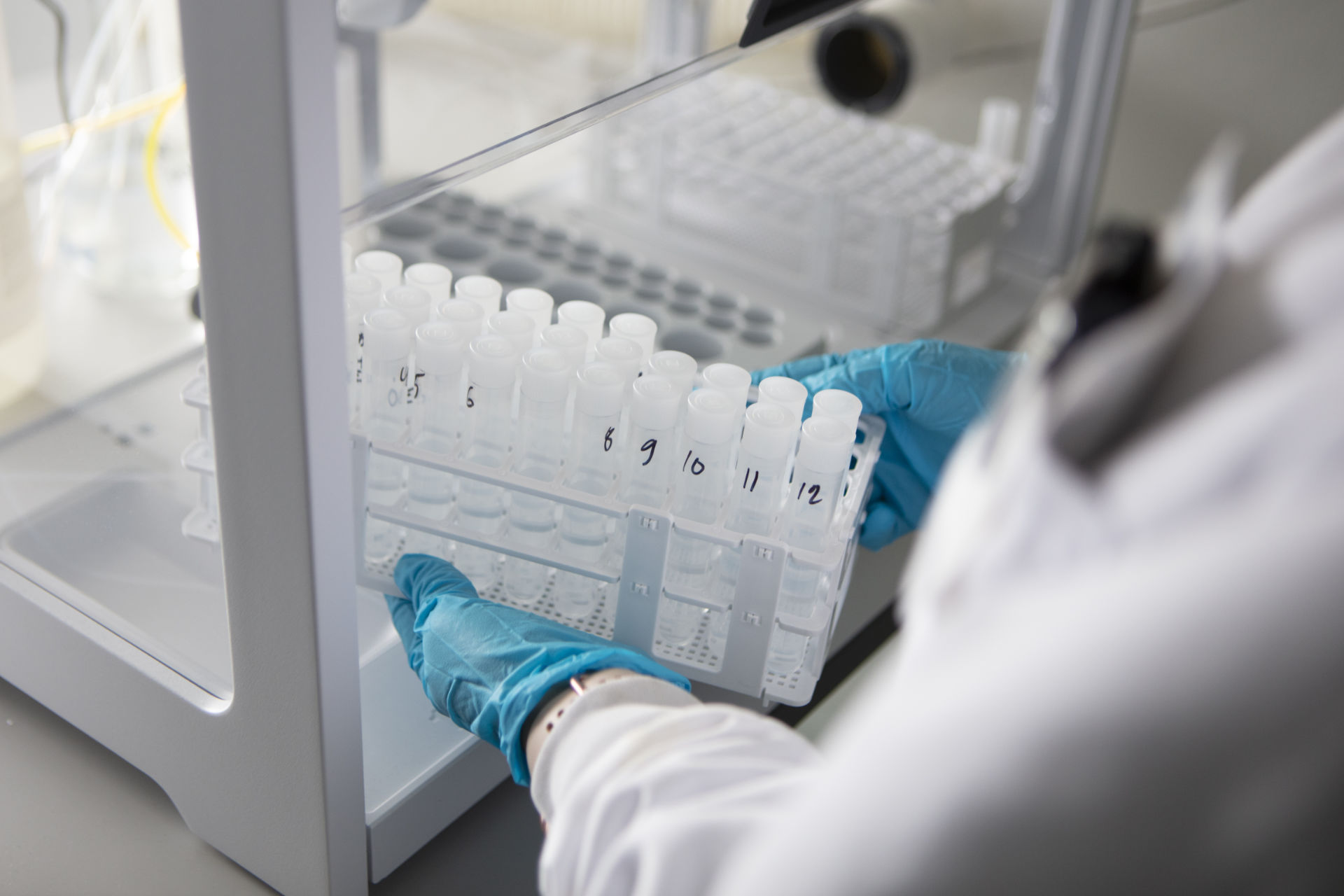
Sodium peroxide fusion is a high-temperature sample preparation technique used to break down refractory minerals that resist conventional acid digestion or even lithium borate fusion. In this method, a finely powdered sample is fused with sodium peroxide in a zirconium crucible. The resulting melt is then dissolved in acid and analyzed using:
This process ensures complete matrix dissolution, making it highly effective for silicate, oxide, and pegmatite-rich samples in mineral exploration workflows.
Sodium peroxide fusion is specifically suited for samples that contain minerals resistant to acid or lithium borate digestion. These include:
This method is ideal when total digestion is needed for reliable multi-element data. It is especially valuable in:
Lithium borate fusion remains a reliable choice for silicate-rich matrices in most mineral exploration programs. However, when your samples contain refractory oxides or pegmatite-hosted rare earth elements, sodium peroxide fusion provides the total digestion and expanded elemental coverage needed for accurate results.
| Feature | Lithium Borate Fusion | Sodium Peroxide Fusion |
| Total digestion of silicates | Yes | Yes |
| Resistant oxide minerals | Partial | Total |
| Suitable for REE analysis | Yes (LBF-MS18) | Yes (SPF-MS16) |
| Pegmatite-specific targets | Not optimized | Available |
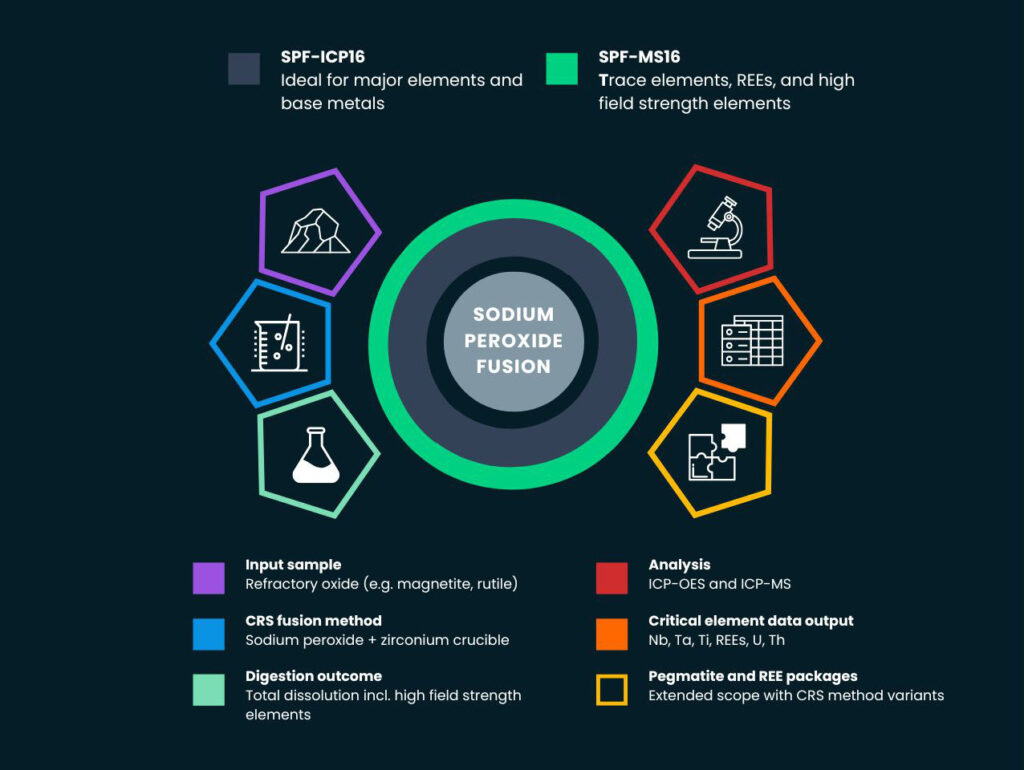
CRS Laboratories offers sodium peroxide fusion under two method codes, performed at our accredited* laboratory in Kempele, Finland:
SPF-ICP16: Fusion with sodium peroxide, followed by ICP-OES analysis. Ideal for major elements and base metals.
SPF-MS16: Fusion with sodium peroxide, followed by ICP-MS analysis. Suitable for trace elements, REEs, and high field strength elements.
All CRS fusion methods include robust quality control, including:
Here are selected detection limits and measurement ranges available with the CRS sodium peroxide fusion methods:
| SPF-ICP16 (major and base elements) | ||
|---|---|---|
| Element | Lower limit | Upper limit |
| Fe | 100 ppm | 50% |
| Ti | 50 ppm | 25% |
| Mn | 30 ppm | 12.5% |
| Cu | 30 ppm | 20% |
| Zn | 50 ppm | 20% |
| SPF-MS16 (trace & REEs) | ||
|---|---|---|
| Element | Lower limit | Upper limit |
| Nb | 1 ppm | 5% |
| Ta, Th | 1 ppm | 0.5% |
| Sn | 10 ppm | 1% |
| W | 1 ppm | 1% |
| Nd | 0.5 ppm | 0.5% |
| Ce, La | 0.5 ppm | 1% |
| U | 1 ppm | 0.1% |
Sodium peroxide fusion is now part of CRS’s analytical service offering. Whether you’re working with iron oxides, HFSE targets, or pegmatite-hosted REEs, this method ensures consistent, accurate, and fully digested data.
You can find the full list of available methods, including sodium peroxide fusion with ICP-OES and ICP-MS finishes, in our Schedule of Services.